Definition
Logical vs. Physical Address
In memory management, the OS distinguishes between:
- Physical Address: The actual location in RAM chips.
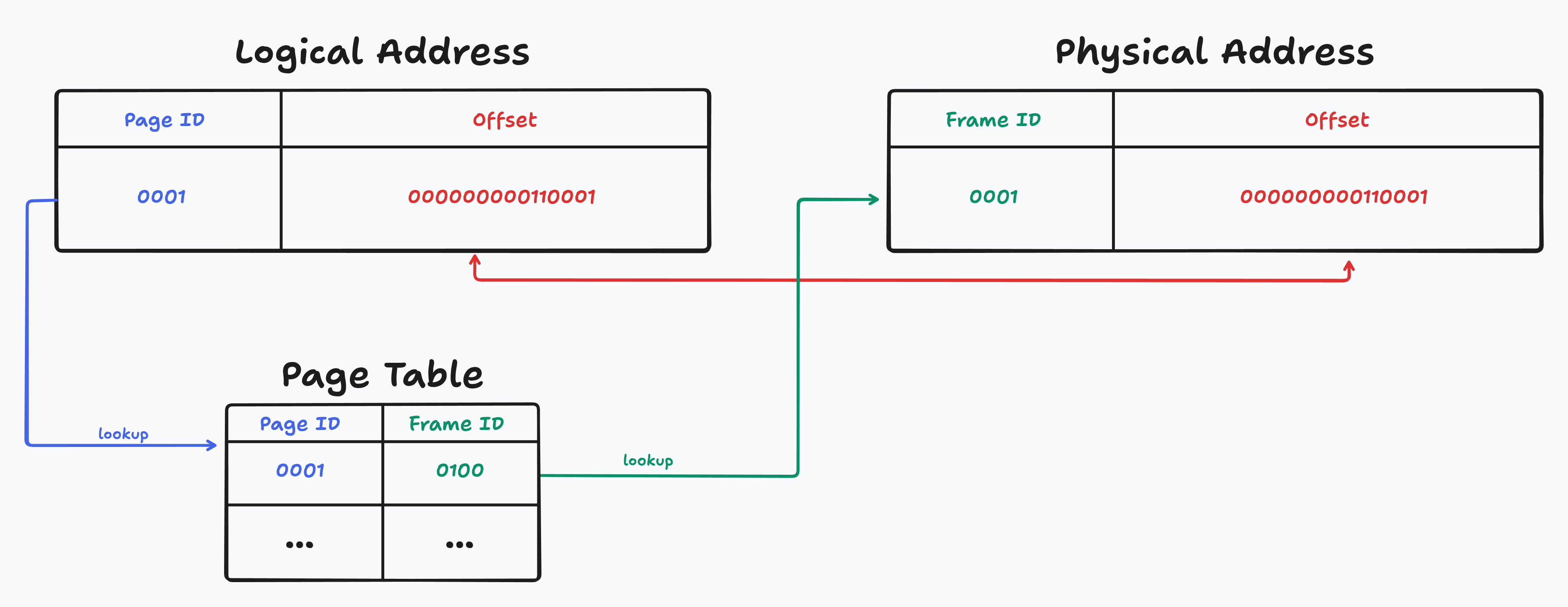
- Logical Address: A reference independent of current physical memory assignment.
Since processes may be moved (compaction, swapping), compiled code uses relative addresses — logical addresses expressed as a displacement from the process start.
The MMU translates logical to physical addresses at runtime:
- Base Register: Physical starting address of the process
- Bound Register: Length of the process’s allocated memory
Properties
Protection
The MMU verifies every logical address is within the bound register before translation.
Efficiency
Programs can be loaded anywhere in RAM without modifying internal address references.